Annual private rent inflation across Britain’s local employment markets has split along an unexpected fault line. Official figures released by the Office for National Statistics on 18 November 2026, covering the October 2026 reference period, show sharp annual increases across several lower-rent and mid-priced authorities in the Midlands and North, whilst some of the UK’s costliest southern and Scottish cities recorded near-flat or falling averages.
In Wolverhampton, average monthly private rent rose by 9.4% in the year to October 2026 to reach £950. Bolton recorded an annual increase of 7.8% to £908 a month, followed by rises of 7.3% in Cumberland (covering Carlisle, £692), Cheshire West and Chester (£1,010) and Cheshire East (covering Macclesfield, £1,001). Kingston upon Hull rose by 6.9% to £697 and York by 6.7% to £1,209.
At the opposite end of the distribution, Aberdeen City recorded an annual fall of 1.7% to £841 a month, Brighton and Hove edged down by 0.6% to £1,823 and Exeter slipped by 0.2% to £1,317. Annual growth barely moved in the City of Edinburgh (+0.3% to £1,409), Leicester (+0.4% to £1,020), Cornwall (+0.4% to £995), Glasgow City (+0.5% to £1,264) and Reading (+0.6% to £1,584).
For candidates weighing a job offer in a new town — and for employers setting pay bands across regional sites — those headline changes require careful handling. Slower annual inflation has not erased large cash gaps in housing costs, and borough-wide rent series cannot be divided into local workplace earnings to produce a household affordability score.
Growth rates and cash rent levels tell two different stories
A rapid annual percentage increase from a low starting point leaves monthly housing costs far below those of southern employment centres where rent inflation has cooled. Even after rising by 7.3% over the year, Cumberland’s October 2026 average of £692 a month and County Durham’s £657 (+6.2%) sit well below Reading (£1,584), Guildford (£1,770, +5.8%), Cambridge (£1,805, +1.7%) and Bristol (£1,907, +4.5%).
Across London as a whole, average private rent stood at £2,350 a month in October 2026 (+3.8% year on year), rising to £2,367 in Richmond upon Thames (+6.4%) and £2,472 in Tower Hamlets (+4.1%). Northern and Scottish authorities outside Edinburgh and Glasgow continue to post substantially lower monthly averages, including Sunderland (£714, +3.8%), Bradford (£743, +2.3%) and Dundee City (£827, +1.3%).
| Statistical area | Average private rent (Oct 2026) | Annual change (YoY) |
|---|---|---|
| Wolverhampton | £950 / month | +9.4% |
| Bolton | £908 / month | +7.8% |
| Cumberland (Carlisle) | £692 / month | +7.3% |
| Cheshire West and Chester | £1,010 / month | +7.3% |
| Cheshire East (Macclesfield) | £1,001 / month | +7.3% |
| Kingston upon Hull, City of | £697 / month | +6.9% |
| York | £1,209 / month | +6.7% |
| Reading | £1,584 / month | +0.6% |
| Glasgow City | £1,264 / month | +0.5% |
| City of Edinburgh | £1,409 / month | +0.3% |
| Exeter | £1,317 / month | -0.2% |
| Brighton and Hove | £1,823 / month | -0.6% |
| Aberdeen City | £841 / month | -1.7% |
Why private rent averages and workplace pay cannot be merged into one ratio
Placing local housing costs beside provisional April 2026 workplace earnings from ONS ASHE Table 7.1 shows where high wages and high rents coincide — and where they pull apart. In Reading, monthly private rent averaged £1,584 in October 2026 whilst provisional April 2026 median gross full-time weekly pay at local workplaces stood at £995.30 (coefficient of variation, or CV, 4.4%). Aberdeen City combined an £841 monthly rent average with workplace full-time weekly pay of £963.10 (CV 3.6%). Conversely, Brighton and Hove paired £1,823 monthly rent with £808.20 weekly workplace pay (CV 3.8%), and Richmond upon Thames paired £2,367 monthly rent with £825.90 weekly workplace pay (CV 5.1%).
Three methodological boundaries explain why those two official series must remain separate. First, in England and Wales the ONS private rent measure combines property sizes and covers the stock of both existing and newly agreed tenancies across a whole local authority, rather than current asking rents for newly advertised lets. In Scotland — affecting Aberdeen City, Edinburgh, Glasgow City and Dundee City — official rent inputs are drawn mainly from advertised new lets and are published for Broad Rental Market Areas, which may differ from council boundaries.
Second, ASHE Table 7.1 records gross weekly pay for full-time employee jobs located inside a workplace authority, regardless of where workers live. Richmond upon Thames houses many residents who commute into central London, whereas Tower Hamlets (£1,245.70 weekly workplace pay, CV 3.6%; £2,472 monthly rent) concentrates financial and professional jobs filled across the wider South East.
Third, the units and tax bases differ. ASHE measures pre-tax weekly pay for an individual full-time employee job in April 2026, whereas private rent is paid monthly out of post-tax household income, often shared by partners or housemates, before Council Tax, utilities and travel costs.
Practical checks before accepting or pitching a regional role
For jobseekers exploring our UK location guides — whether in Reading, Wolverhampton or Aberdeen — check current listings for your exact property size, confirm which council covers the postcode and price the door-to-door commute alongside rent.
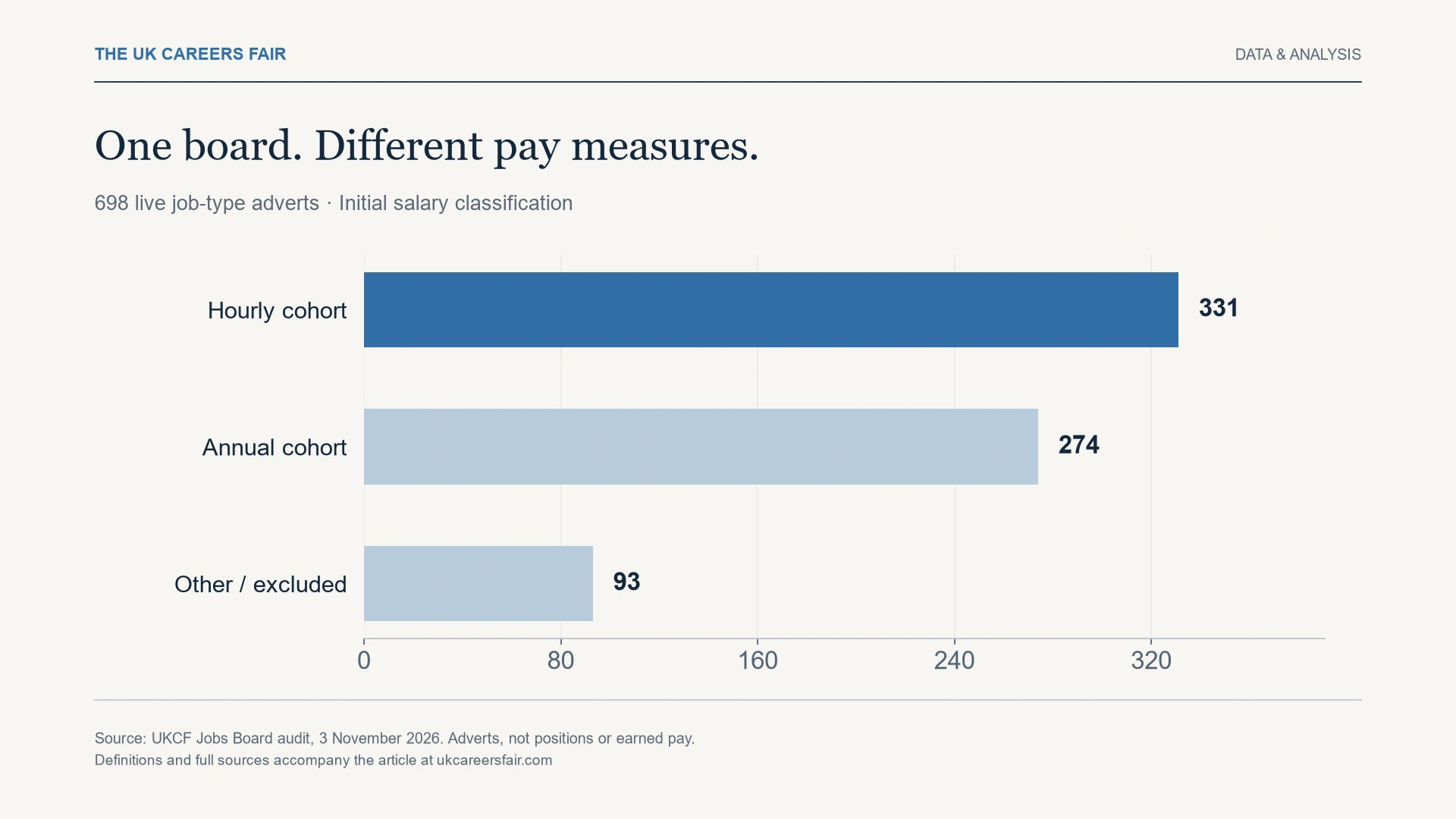
For employers recruiting on The UK Careers Fair Jobs Board or meeting candidates at upcoming recruitment events, brisk rent rises in lower-cost towns mean local living costs are shifting even where major-city averages appear steady. As our Jobs Board salary audit notes, clear pay units, hours and workplace postcodes help applicants assess whether an offer works.
Sources and method
- ONS: Housing prices in Wolverhampton (E08000031), Reading (E06000038) and Aberdeen City (S12000033); released 18 November 2026; October 2026 reference period.
- ONS: Place of work by local authority, ASHE Table 7; provisional April 2026 median gross full-time weekly pay and CV%, released 22 October 2026.
- ONS: Employee earnings in the UK, 2026; released 22 October 2026.
- The UK Careers Fair: Jobs Board advertised-pay methodology; 3 November 2026 snapshot.
About this reporting: Published by The UK Careers Fair Limited, which organises recruitment events across the UK and operates The UK Careers Fair Jobs Board. Official rent and workplace-earnings series cover different populations, geographies and periods; no household rent-to-income ratio is inferred. Read our editorial standards and corrections policy.